FIGHT BACK NATURALLY

Springtime doesn’t just mean warmer weather, colorful flowers and greening grass. It also brings seasonal allergies. For pets, it can be a miserable time of year, because dogs and cats are lower to the ground and pick up allergens on their fur. Grass, weeds, pollen, lawn chemicals, fertilizers and fleas can trigger reactions such as itchy skin, raw paws, sneezing fits and general discomfort.
Due to the warmer temperatures of the past decade, flea allergies in dogs have risen 12 percent, while cats have seen a whopping 67 percent increase. Environmental allergies are also up 30 percent for dogs and 11 percent for cats, according to the 2018 State of Pet Health Report from the Banfeld Pet Hospital, in Vancouver, Washington. The most common environmental allergens include dust mites, mold, fabric, feathers and cleaning solutions.
Symptoms
A dog’s itching will often manifest between the toes, on the wrists, “armpits”, groin, legs, ears, eyes and back, just in front of the tail. In the quest for relief, dogs will lick, chew, pull out hair and scratch, often leaving bare spots or open wounds that may get infected. Cats will pull hair, scratch ears and develop a rash or bare spot on the stomach or inside the legs. In extreme cases, a veterinarian will give an injection to calm the itchiness before more damage is done. Owners can use that lull to investigate what is causing the allergy.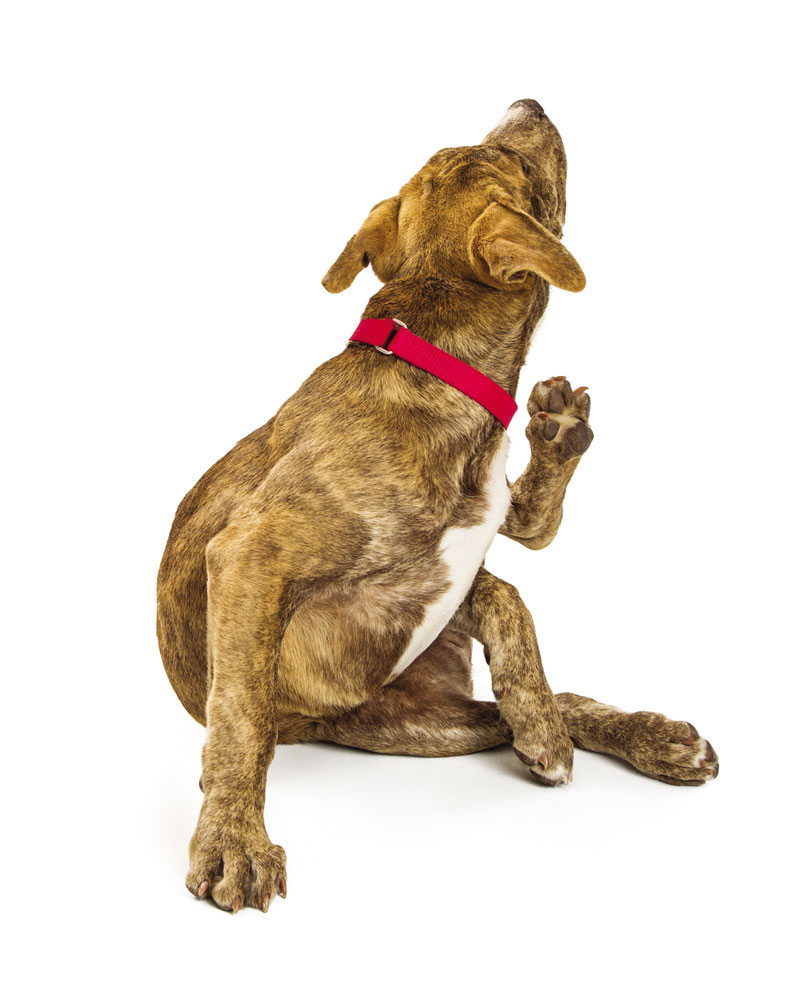
Fleas
For fleas, there are more natural ways to end the cycle than using potentially toxic pet treatments. Diatomaceous earth (DE) is affordable, non-toxic and safe, made from fossils of marine life crushed into a superfine powder. Its deadly effect on insects stems from piercing their hard shells so they become dehydrated. It does not harm mammals. Be sure to buy food-grade DE, not the kind that’s designed for use in pools and gardens. Simply dust the dog to the skin with the powder and sprinkle it on bedding, rugs and carpets. Cats tend to have more favorite nap spots than dogs, so vacuum first to get rid of any flea eggs. Sprinkle the DE and leave it in place for a couple of weeks. Vacuum again. DE can be hard on regular vacuums, but a Shop-Vac is up to the task.Likely Causes and Remedies
- A change in cleaning products. Use unscented, all-natural cleansers. Put the dog or cat in another room when vacuuming so they don’t breathe dust. A new cat litter can trigger allergic reactions. Look for unscented, dust-free litter.
- Plastic bowls. Switch to stainless steel bowls for food and water
- Seasonal flowers and grasses. Pet-friendly wipes will remove excess pollen when the dog comes in after outdoor time. A twice-weekly bath during the worst of the season and weekly as blooming subsides will wash away pollens. An oatmeal shampoo is soothing; don’t use tea tree oil-based shampoos, which may further irritate skin. Be sure to dry the fur. Wet bedding can cause mold, another allergen.
- Dust mites. Replace worn beds and bedding on a regular basis. Look for natural fabrics and fillings; no own or feathers. Wash weekly.
- Lack of proper filtration. The air conditioner will capture incoming pollen: Be sure to change the filter often.
- Check the paw pads. If they’re irritated or red and raw, ask the vet for a salve to ease the pain while they heal. Be sure to wipe paws when coming into the house.
- Take a look inside the ears. Allergies can lead to earaches, so watch for red, inflamed skin or black, tar-like goop. Either requires a vet visit and a prescription salve.
- If dog walks are part of regular exercise, ask neighbors or local park employees if they’ve sprayed pesticides or treated grassy areas.
- Add a small amount, based on weight, of Omega-3-rich fish oil to food to soothe and smooth the skin.
- Diligence in spotting symptoms can stop itching in its tracks when remedies are in place or at hand.